Clear blister packaging is widely used for cosmetics, electronics, hardware, toys, stationery, and retail consumer products. Its transparent appearance allows customers to see the product directly while providing protection during storage, transportation, and display. However, when a blister package develops yellow patches, brown marks, cloudy areas, or uneven coloration, its appearance and perceived quality can be affected.
What causes discoloration in blister packaging? In most cases, the problem is related to excessive or uneven heating, contaminated raw materials, mold residue, poor equipment maintenance, or unsuitable processing conditions. The exact cause depends on the plastic material, thermoforming process, and where the discoloration appears.
For blister packaging manufacturers, identifying the source of discoloration is more effective than simply adjusting the heating temperature or replacing the material. This guide explains the common causes of blister packaging discoloration, how to identify different defects, and what manufacturers can do to prevent them. Jiangxin Packaging provides customized plastic blister packaging solutions for different product applications, where material selection, forming conditions, and finished-product appearance all matter.
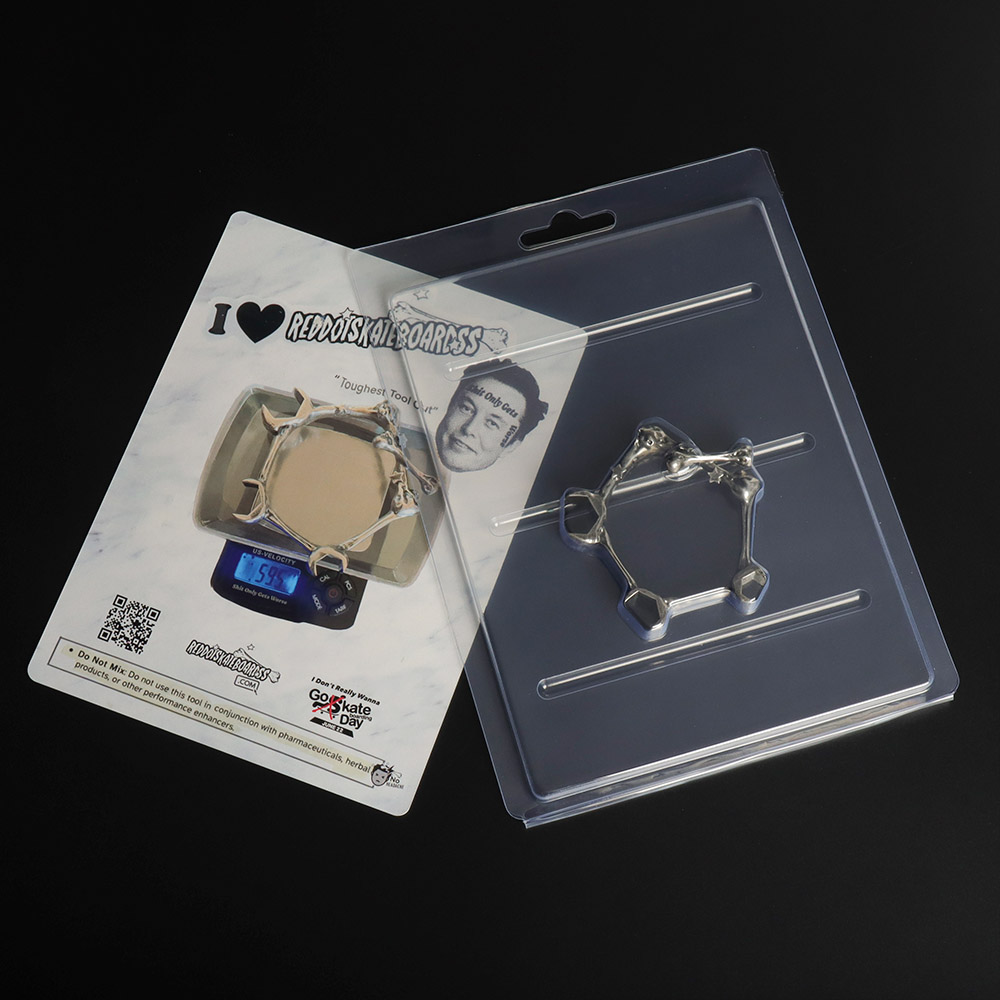
Clear clamshell blister packaging designed to display and protect retail products.
Discoloration does not always appear in the same form. Some defects are visible immediately after thermoforming, while others become noticeable after storage or exposure to heat and light.
Understanding the appearance of the defect can help manufacturers narrow down the possible cause.
Not every cloudy or white area is caused by chemical discoloration. For example, surface scratches and stress whitening can change the way light passes through the plastic without necessarily changing the material's chemical composition.
This distinction is important because different defects require different corrective actions.
Thermoforming equipment plays an important role in determining the appearance and consistency of finished blister packaging. If the machine is not properly maintained or its heating system is unstable, the plastic sheet may be exposed to inconsistent processing conditions.
Contaminated equipment surfaces
Dust, oil, plastic residue, and other foreign particles can accumulate on machine surfaces, heating components, rollers, or material-contact areas. During production, these contaminants may transfer to the plastic sheet or become trapped on its surface, creating visible spots or uneven coloration.
Regular cleaning of material-contact areas and routine equipment inspections help reduce this risk. Cleaning procedures should also ensure that no cleaning-agent residue remains on the equipment.
Uneven heating temperature
Uneven heating is one of the important causes to investigate when blister sheets show localized yellowing or brown marks. If some areas become significantly hotter than others, the material may experience excessive thermal exposure. Depending on the polymer and its formulation, this can lead to discoloration, loss of clarity, or other signs of thermal degradation.
Possible equipment-related problems include:
Manufacturers should check temperature readings across different heating zones instead of relying on a single displayed temperature. Comparing the actual sheet temperature and the equipment settings can help identify heating inconsistencies.
Yes. Mold conditions can affect the surface appearance of thermoformed blister packaging. A mold that contains residue, has blocked ventilation channels, or is not properly maintained may contribute to localized defects.
Poor mold venting
During vacuum forming, air needs to escape through the mold's venting channels so the heated plastic can conform to the intended shape. If these channels become blocked, air may remain trapped between the sheet and mold surface.
Poor venting can result in incomplete forming, uneven surface contact, or localized defects. When combined with excessive heating or trapped material residue, dark marks may also appear. Manufacturers should inspect and clean mold vents regularly to maintain consistent forming performance.
Excessive mold-release agents or lubricants
Some forming processes use release agents or other auxiliary materials. If these substances are applied excessively or are not compatible with the plastic and processing conditions, they may leave residues on the mold or sheet surface.
These residues can cause visible stains, uneven surface appearance, or printing and adhesion problems. The correct approach is to use only approved materials in controlled quantities and follow the recommended mold-cleaning procedure.
Material residue on the mold
Plastic fragments, degraded polymer deposits, dust, and other contaminants can accumulate after repeated production cycles. If they remain on the mold surface, they may transfer to subsequent blister products.
For this reason, mold maintenance should be part of routine quality control rather than something performed only after defects become visible.
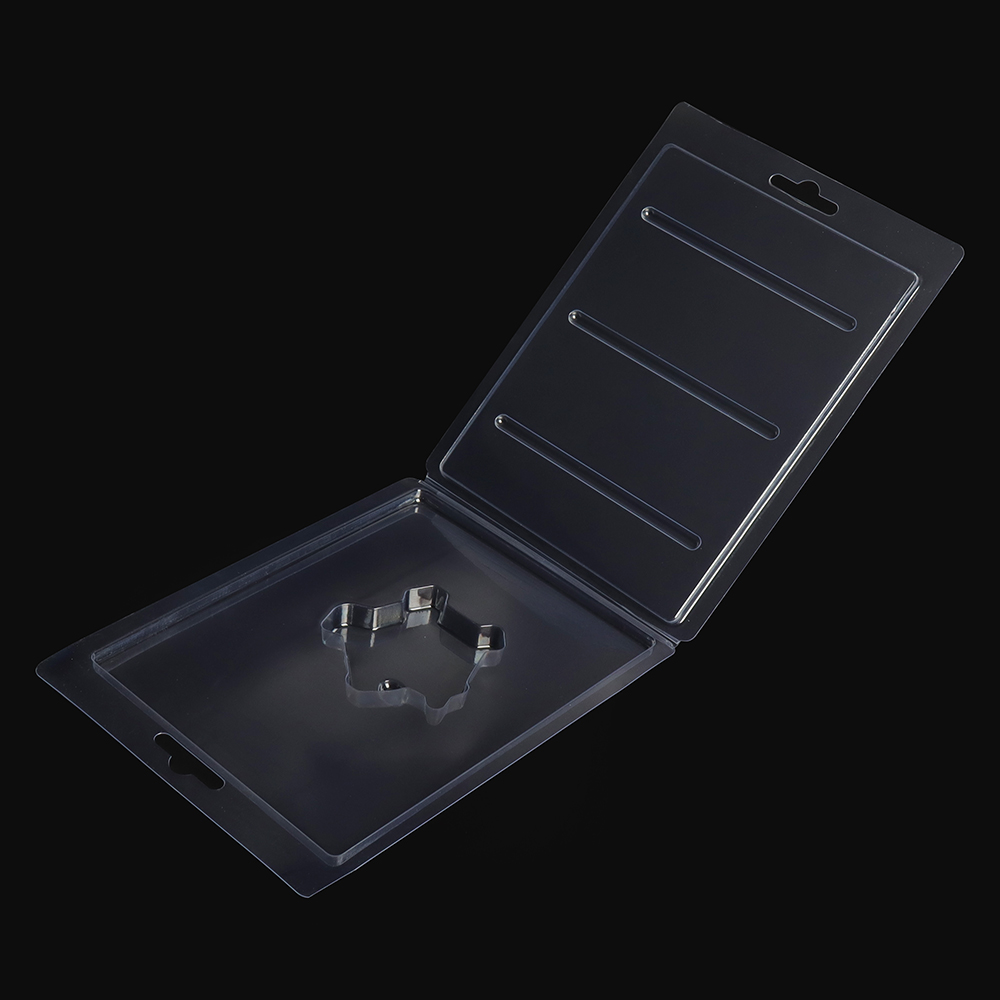
Thermoformed clear blister clamshell packaging with molded product cavities.
The raw material itself is another important factor in blister packaging discoloration. Even when equipment and molds are operating correctly, inconsistent sheet quality can still affect the final product.
Excessive moisture or volatile substances
Some plastic materials are sensitive to moisture during processing. Depending on the polymer grade and production conditions, excessive moisture or volatile substances may contribute to bubbles, surface defects, haze, or changes in appearance.
For moisture-sensitive materials, proper storage and any manufacturer-recommended drying procedures are important. Material handling should follow the technical specifications provided by the resin or sheet supplier.
Thermal degradation of polymers and additives
Plastic sheets contain polymer resins and may also contain stabilizers, colorants, processing aids, or other additives. If the sheet is exposed to excessive temperatures or prolonged heating, some components may degrade or change color.
This can be particularly noticeable when transparent materials are expected to maintain a clean, colorless appearance. A sheet that looks clear before processing may develop yellow or brown discoloration if its thermal limits are exceeded.
Inconsistent raw material batches
Differences in resin quality, recycled content, additive formulation, or sheet manufacturing conditions can influence transparency and color consistency. Mixing materials from different batches without proper verification may produce noticeable variations in finished packaging.
Manufacturers should establish incoming material checks and maintain traceability for each production batch.
Foreign material contamination
Dust, oil, paper fibers, incompatible plastic particles, and other contaminants can become visible after heating and forming. In some cases, these particles may create dark spots or uneven areas that resemble thermal discoloration.
Keeping raw materials sealed, maintaining a clean storage environment, and controlling material handling can help prevent contamination.
PET and PVC are commonly used for transparent blister packaging, but they do not respond to heat in exactly the same way. Their processing windows, formulation requirements, and thermal behavior are different. Therefore, the same heating settings should not automatically be applied to both materials.
PET blister packaging discoloration
PET is widely selected for its transparency and mechanical performance. However, excessive heating, prolonged thermal exposure, unsuitable processing conditions, or material contamination may affect its appearance.
If PET blister sheets become yellow after forming, manufacturers should review the heating profile, sheet specifications, material storage conditions, and any signs of degradation during processing.
PVC blister packaging discoloration
PVC formulations contain stabilizers and other additives that influence their processing performance. Excessive heat or unsuitable processing conditions can contribute to thermal degradation, which may appear as yellowing, browning, or darker discoloration.
For PVC, it is particularly important to follow the processing temperature recommendations for the specific sheet formulation rather than using a generic temperature setting.
Jiangxin offers customized PET and PVC clamshell blister packaging for different product shapes and display requirements. Selecting the appropriate material and confirming its forming characteristics are important steps in maintaining consistent appearance.
The following comparison summarizes the main points to check:
| Inspection Item | PET Blister Sheets | PVC Blister Sheets |
|---|---|---|
| Heating conditions | Check the material-specific forming window and heating uniformity | Follow formulation-specific temperature limits and avoid excessive heating |
| Material quality | Check clarity, contamination, and batch consistency | Check sheet quality, formulation consistency, and additive compatibility |
| Possible appearance defects | Haze, yellowing, surface marks, or uneven transparency | Yellowing, browning, dark spots, or surface defects |
| Key control measures | Control heating time, temperature, and material storage | Control temperature, formulation suitability, and processing time |
These are general inspection guidelines, not fixed processing specifications. The actual forming temperature and heating time must be determined according to the material supplier's technical data and the equipment used.
Not every discoloration problem originates inside the thermoforming machine. The surrounding production environment and the way plastic sheets are stored can also influence the final appearance.
Dust and airborne contamination
Dust and airborne particles can settle on plastic sheets during storage, handling, or production. When the material is heated, contamination may become more noticeable or create localized marks.
Exposure to sunlight and UV light
Some plastic materials and additives can change color after prolonged exposure to ultraviolet light. If blister sheets or finished packages are stored near windows or in areas exposed to direct sunlight, discoloration may develop over time, depending on the material formulation.
Unsuitable storage temperature
High storage temperatures, direct heat sources, and poor warehouse conditions may affect certain plastic sheets or packaging components. Material suppliers' recommended storage conditions should be followed to reduce the risk of premature changes in appearance.
Contact with incompatible chemicals
Cleaning agents, oils, solvents, adhesives, and other chemicals may affect some plastic materials or their surface appearance. Chemical compatibility should be checked before these substances are used around blister sheets or finished packaging.
Preventing discoloration requires consistent control throughout the production process. Instead of waiting until finished blister products show visible defects, manufacturers should build preventive checks into material inspection, equipment maintenance, forming, and final quality control.
Use consistent, qualified raw materials
Purchase plastic sheets from reliable suppliers and confirm the material grade, thickness, transparency, and batch specifications. Keep incoming material records so that any appearance problem can be traced back to its source.
Maintain stable heating conditions
Check heating elements, thermocouples, and temperature controllers regularly. Monitor different heating zones and verify that the material receives consistent heating without exceeding its recommended processing limits.
Clean molds and production equipment
Remove plastic residue, dust, oil, and other contaminants from material-contact surfaces. Inspect mold ventilation channels and make sure release agents or auxiliary materials are used correctly.
Control production parameters
Keep records of heating temperature, heating time, forming pressure or vacuum conditions, and cooling conditions. When a defect appears, compare the affected batch with previously approved production records.
Keep the production environment clean
Maintain appropriate housekeeping standards in raw material storage and production areas. Protect plastic sheets from dust, direct sunlight, excessive heat, and incompatible chemicals.
Inspect finished packaging consistently
Check the transparency, color, surface condition, dimensions, and forming quality of finished blister products. Use approved reference samples to help identify color variations between batches.
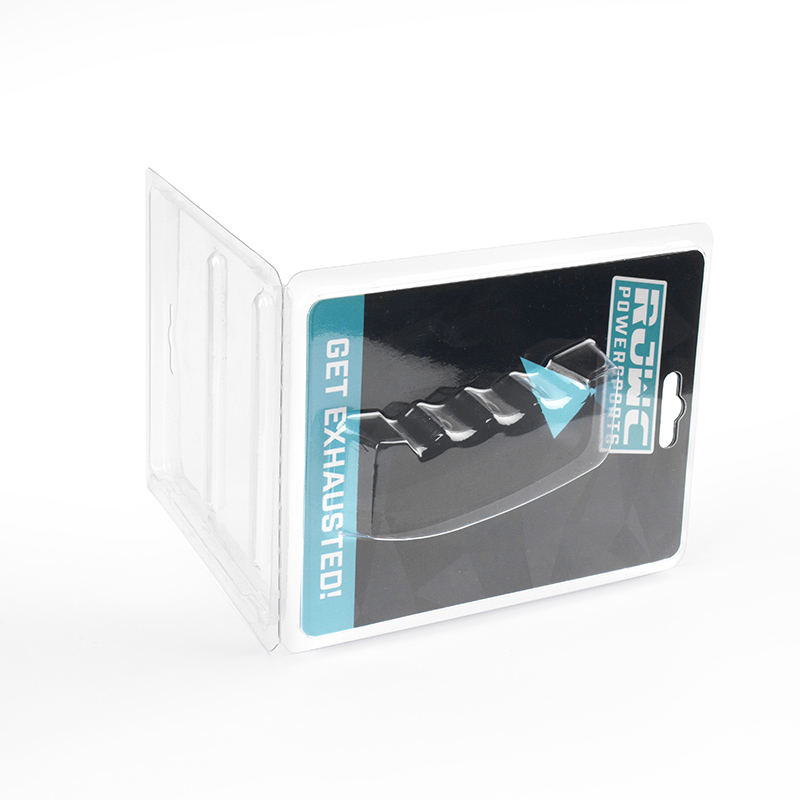
Finished clear clamshell blister packaging showing the transparent formed structure and printed insert card.
When discoloration is discovered during production, the first step is to identify when and where the defect appears. Changing several machine settings at the same time can make the problem harder to diagnose.
A more practical troubleshooting process is to follow these steps:
The following table can help production teams connect visible defects with possible inspection priorities.
| Visible Defect | Possible Causes | First Inspection Priority |
|---|---|---|
| Overall yellowing | Material degradation, excessive heating, storage issues | Compare raw sheet color and review thermal history |
| Localized brown or black marks | Hot spots, degraded residue, contamination | Inspect heating zones, mold, and material-contact surfaces |
| Cloudy or hazy areas | Surface damage, material issues, forming conditions | Check the raw sheet, surface condition, and forming profile |
| Uneven color across the sheet | Uneven heating or inconsistent material properties | Compare heating-zone temperatures and sheet batches |
| White spots or streaks | Contamination, stress whitening, surface defects | Examine the defect under consistent lighting and inspect the material surface |
This troubleshooting guide is intended as a starting point. If discoloration is severe or the cause remains unclear, material testing and a review of the actual production conditions may be necessary before restarting full-scale production.
Consistent appearance is an important requirement for transparent blister packaging, particularly when the product is displayed directly to customers. Material quality, mold design, forming conditions, and production inspection all contribute to the final packaging result.
Jiang Xin Packaging Products Co., Ltd. was established in 2009 and is based in Xiamen, China. The company specializes in transparent plastic packaging, including PET, PVC, PP, and other material options for different packaging applications.
Its blister packaging solutions cover a range of product categories, including electronics, hardware, stationery, toys, cosmetics, food-related packaging, and consumer goods.
Customers can select customized packaging structures according to their product dimensions, shape, display requirements, and material preferences. Options include clear clamshell packaging, blister card packaging, and formed trays with product-specific cavities.
For example, custom clear clamshell blister packaging for hardware tools combines a transparent formed shell with a printed paper card, allowing the product to remain visible while providing space for brand information.
When developing a new blister packaging project, buyers should discuss the material grade, sheet thickness, mold structure, forming requirements, and appearance standards with the manufacturer before mass production.
If you are sourcing transparent blister packaging or experiencing quality issues with an existing design, you can contact Jiangxin Packaging to discuss your product specifications and customized packaging requirements.
What causes discoloration in blister packaging?
Blister packaging discoloration can result from excessive heating, uneven temperature distribution, contaminated raw materials, mold residue, unsuitable additives, or poor storage conditions. The actual cause depends on the plastic material and production process.
Why does clear PET blister packaging turn yellow?
PET blister packaging may turn yellow when exposed to excessive heat, prolonged thermal exposure, unsuitable processing conditions, or contaminated materials. Manufacturers should check the original sheet, heating profile, and production records to identify the cause.
Why does PVC blister packaging become brown or yellow?
PVC can develop yellow or brown discoloration when its formulation is exposed to excessive heat or unsuitable processing conditions. Thermal degradation of the polymer or its additives may be involved. The recommended processing window for the specific PVC sheet should be followed.
Can uneven heating cause blister packaging discoloration?
Yes. Uneven heating can create localized hot spots that expose some areas of the plastic sheet to excessive thermal energy. This may cause uneven coloration, haze, or localized thermal damage.
Can mold contamination cause black spots on blister packaging?
Yes. Plastic residue, degraded material, dust, oil, or other contaminants on the mold may transfer to the formed sheet and create dark spots. Mold cleaning and regular inspection help reduce this risk.
Why does blister packaging become cloudy after thermoforming?
Cloudiness may be related to material quality, surface damage, stress whitening, moisture-related processing problems, or unsuitable forming conditions. Comparing the original sheet with the finished product helps determine when the defect occurs.
How can manufacturers prevent blister packaging from turning yellow?
Use qualified raw materials, maintain stable heating conditions, avoid excessive thermal exposure, clean molds and equipment, control storage conditions, and inspect finished products against approved color and transparency standards.
Does recycled PET cause blister packaging discoloration?
Not necessarily. Properly selected and processed recycled PET can be used for transparent packaging applications. However, recycled feedstock quality, contamination, color consistency, and material formulation should be checked to ensure the required appearance.
How do I identify whether discoloration comes from raw materials or the forming process?
Compare an unprocessed sheet from the same batch with the finished blister product. If the raw sheet already shows discoloration, investigate material quality and storage. If the sheet is clear before forming but changes color afterward, review heating conditions, mold cleanliness, and forming parameters.


copyright @ 2026 Xiamen Jiangxin Plastic Box Co., Ltd. All Rights Reserved.
Sitemap
/ Blog
/ Xml
/ Privacy Policy
 Network Supported

 English
 español